Weather Is the Director Now: Inside America's Parking Lot Projection Underground
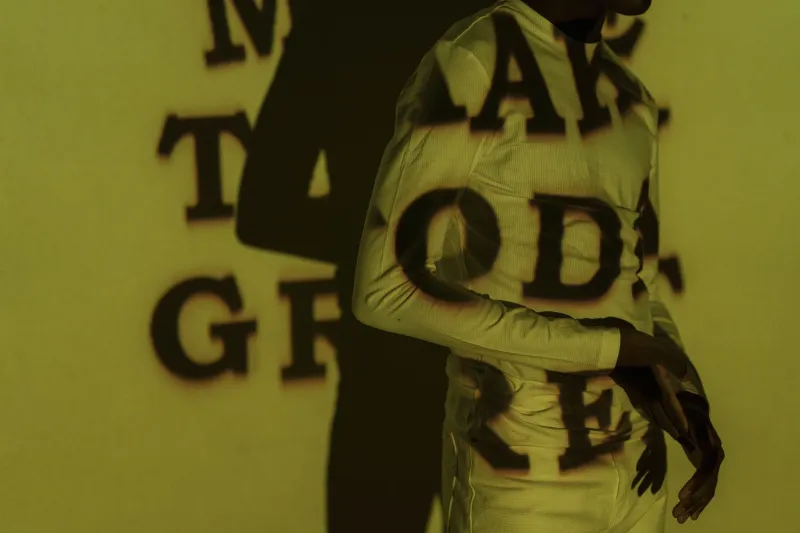
It's 11 PM in a strip mall outside Columbus, Ohio, and a video is about to start on the side of a closed-down RadioShack. There's no permit. There's no seating. There is, however, a 60% chance of precipitation, and nobody in the crew of nine seems remotely worried about it.
"If it rains," says the projectionist, a 27-year-old who goes by Moth, "the rain is in the movie."
Welcome to the parking lot screening circuit — the underground's answer to a question nobody in a black-box theater ever asks: what happens when you surrender control of your art to the actual world?
The Gallery Is a Sealed Room. The Street Is Not.
Experimental video has spent decades marinating in controlled environments. Galleries dim the lights, kill the HVAC hum, and hand you a pair of headphones. It's sterile by design. But a new wave of nomadic projectionists has decided that the seal is the problem — that a video isn't finished until it's been forced to survive contact with traffic noise, moths, drunk strangers, and an actual American summer thunderstorm.
The logic is almost theological. If your piece can only exist under perfect conditions, is it really alive? These crews believe a projection in public is never the same twice. A car alarm becomes a soundtrack. A passerby's shadow lands inside the frame and becomes a performer. A gust knocks the screen and the image folds in on itself. Every screening is a premiere and a final cut simultaneously.
And in an era where every stream is tracked, timestamped, and served to an algorithm for quality control, the unrepeatable public screening has quietly become the underground's prestige format. You had to be there. Literally. There is no there else.
Laundromats, Rooftops, and the Storm Drain Scene
The venues are gloriously unromantic. Laundromat walls during the late shift, the spin cycle providing percussion. Rooftops in Bushwick and downtown LA where the skyline fights the projector for contrast and the skyline usually wins, which is the point. One crew in Phoenix stages regular screenings at the mouth of a flood-control channel, letting the concrete amphitheater do the acoustics.
The gear is scavenged and stacked: retired classroom projectors bought off government surplus sites for the price of a pizza, car batteries wired to inverters, extension cords run out the back door of whatever business said yes. The whole rig often costs less than a festival submission fee.
What they're showing is as varied as the locations — hand-processed films, glitch pieces, slow cinema that would bore a gallery audience to tears but hits different when a ambulance screaming past splits the image in half with red light.
Strangers as Co-Directors
Here's the part that makes veteran video artists nervous: the audience is not curated. Anyone can wander in. A guy walking his dog at midnight becomes a viewer whether he consented or not. And according to nearly every projectionist we talked to, that's where the magic concentrates.
"In a theater, people perform attention," one Detroit-based crew member told us. "In a parking lot, someone yells 'what the hell is this?' and that yell is part of the work now. I've had pieces completely restructured by a heckler. Best collaboration of my career."
The accidental audience is the point. These screenings catch people who would never buy a ticket to an experimental film evening — the closing-shift cook, the rideshare driver waiting for a ping, the teenagers on bikes. Exposure to art without a velvet rope, without a lecture, without a single press release.
The Fragility Economy
Skeptics call it romanticized inconvenience. Why screen somewhere the image can be washed out by headlights or erased by drizzle when a Discord watch party is stable and warm?
Because stability is exactly what this scene is fleeing. The same artists who watched platforms throttle, demonetize, and quietly delete their work have concluded that vulnerability isn't a bug — it's the last unownable quality. A screening that exists only once, in one parking lot, in one weather system, cannot be monetized, scraped, reposted, or recommended. It can only be remembered.
Moth's crew keeps a group chat called THE FORECAST, and scheduling is a dark art: they track weather radar like storm chasers, hunting for the sweet spot of overcast skies that make projections pop without actual rain. Sometimes they misjudge. One screening in Louisville ended when a genuine downpour hit at minute four.
"Best screening we ever did," Moth says, grinning. "Twenty people stood under the gas station awning watching the last three minutes through water. Nobody moved. You can't buy that. Netflix can't buy that."
The rain test isn't a metaphor. It's the whole review system: if your video can hold a parking lot of strangers through weather, traffic, and chance, it passes. Everything else is just content.