Overload on Purpose: The Artists Making Videos Designed to Break the Internet
Most people making video content spend enormous energy optimizing for delivery — compressing files, hitting codec specs, making sure the thing loads fast on a phone in a bad cell zone. A small but increasingly visible group of artists is doing the exact opposite. They're making videos that are specifically, deliberately, almost lovingly engineered to fail.
Not fail in the sense of being bad. Fail in the sense of breaking the pipes.
What Technical Sabotage Actually Looks Like
The methods vary, but the intent is consistent. Some artists work with intentionally bloated container formats — wrapping video data in nested file structures so dense that streaming servers timeout before they can parse the content. Others manipulate frame rate metadata in ways that cause players to attempt rendering speeds that existing hardware can't sustain, producing cascading buffer failures that generate their own strange visual artifacts in the process.
Then there's the codec warfare approach: encoding video in deliberately obscure or partially corrupted formats that most platforms will attempt to transcode before rejecting, burning server cycles in the process. One artist working under the name Null_Stream has spent the better part of three years developing what they describe as "adversarial video objects" — files that pass initial platform validation checks but trigger failure states during distribution.
"The platform thinks it can handle it," Null_Stream explains over a Signal call. "It accepts the upload, starts processing, and then something in the pipeline just... stops. That gap between acceptance and failure is where the work lives."
The Politics Are Baked Into the Format
To understand why anyone would want to do this, you have to understand what these artists are pushing against. The major streaming and social platforms have built extraordinarily sophisticated content distribution infrastructure — infrastructure that is also, not coincidentally, an extraordinarily sophisticated system of control. What gets delivered, at what quality, to which audiences, under what algorithmic conditions — all of that is decided by a handful of companies whose business model depends on smooth, seamless, frictionless delivery.
Smooth and seamless, these artists argue, is itself an ideological position. The infrastructure isn't neutral. It was built to serve specific commercial interests, and the optimization standards embedded in it reflect those interests completely.
Making a video that the infrastructure cannot handle is, in this reading, a form of political speech. It's not just saying something critical about platform power — it's enacting that critique at the level of the file itself.
Kai Oduya, a Chicago-based media artist who teaches at the School of the Art Institute, frames it this way: "Every codec standard, every compression algorithm, every streaming protocol is a set of decisions someone made about what video is and how it should move through the world. When you engineer against those decisions, you're not just being difficult. You're doing criticism."
System Failure as Aesthetic Experience
Here's where it gets genuinely interesting as art rather than just as protest: the failure states these artists engineer are often visually compelling in ways that couldn't be achieved through conventional production.
When a video file overwhelms a streaming server's transcoding pipeline, the resulting artifacts — partial frames, color plane separations, temporal stutters — aren't random. They're shaped by the specific architecture of the system that failed. The aesthetic is a direct product of the infrastructure. You're seeing the inside of the machine.
One of the most striking examples of this approach is a piece by Los Angeles artist Sable Vance, who spent eighteen months developing a video that generates different visual outputs depending on which platform attempts to stream it. YouTube's transcoding pipeline produces one set of artifacts. Vimeo produces another. TikTok's systems produce something else entirely. The work isn't a fixed object — it's a process that reveals each platform's specific internal logic through the unique way each one breaks.
Vance describes the project as "a portrait of infrastructure." The video tells you something about YouTube not through content, but through the specific way YouTube fails to contain it.
The Audience Problem (Which Is Also a Feature)
Obviously, making videos designed to crash delivery systems creates a somewhat significant distribution challenge. If the work can't be streamed, who sees it?
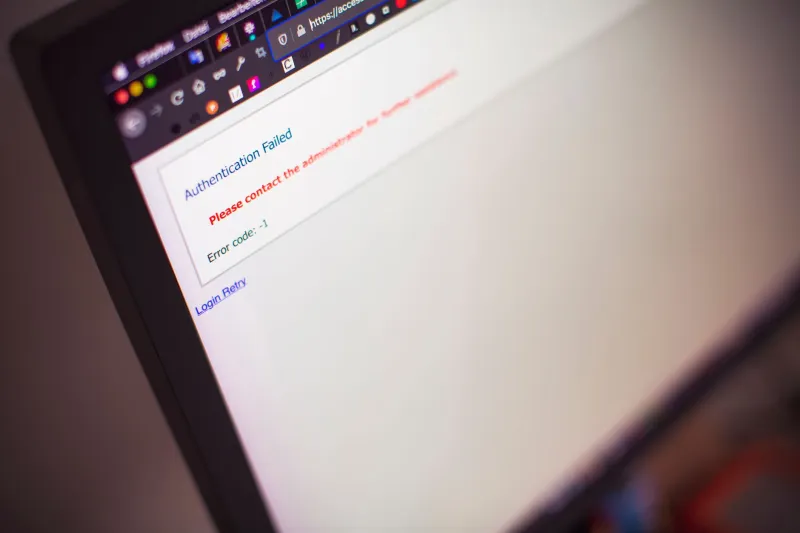
For most of these artists, that question is part of the point. The work exists in documentation, in exhibition contexts, in USB drives passed between people, in screenshots of error messages. Some pieces are presented as live events — a single attempt to stream the file, in real time, with an audience watching the failure happen. The buffering wheel is the performance.
This hyper-localized, friction-heavy distribution model is a direct rebuke to the frictionless everywhere-at-once delivery that streaming platforms promise. The difficulty of access is load-bearing. It changes the relationship between the work and the audience in ways that matter.
"If you have to work to see it, you're already in a different mode," says Null_Stream. "You're not scrolling. You're paying attention."
The Line Between Art and Attack
It's worth acknowledging the harder question this work raises: where does adversarial aesthetics end and actual infrastructure sabotage begin? Deliberately consuming server resources, triggering platform systems, engineering files to circumvent validation — these things exist in genuinely ambiguous legal and ethical territory.
Most of the artists working in this space are careful to operate at the level of individual uploads rather than coordinated attacks, and to work within contexts — galleries, experimental platforms, academic institutions — that provide some framework for the activity. But the line is real, and the artists themselves acknowledge it.
What's clear is that the conversation these works are starting — about who controls video infrastructure, what optimization really means, and whose interests are served by seamless delivery — is one that experimental visual culture is uniquely positioned to have. Not through manifestos. Through files that make the system show its seams.
The bandwidth rebellion isn't asking for permission. It's watching the buffer spin.