The Room Is the Medium: Why Underground Filmmakers Are Choosing Walls Over Wi-Fi
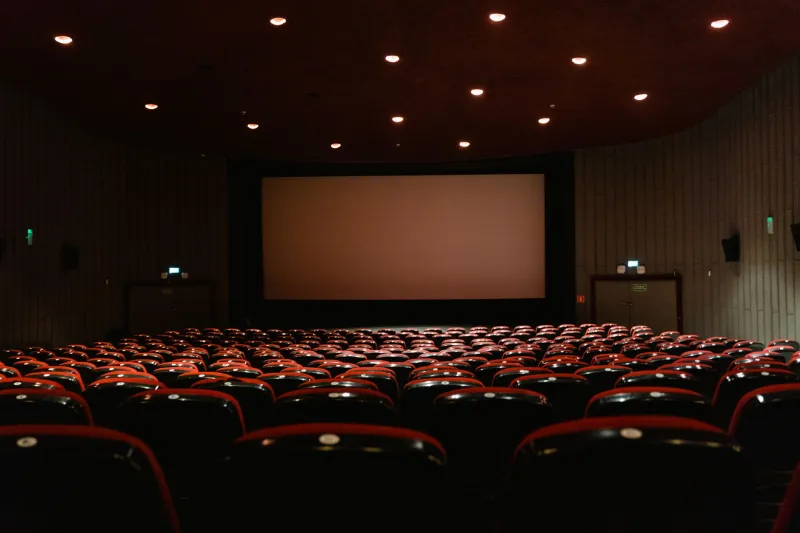
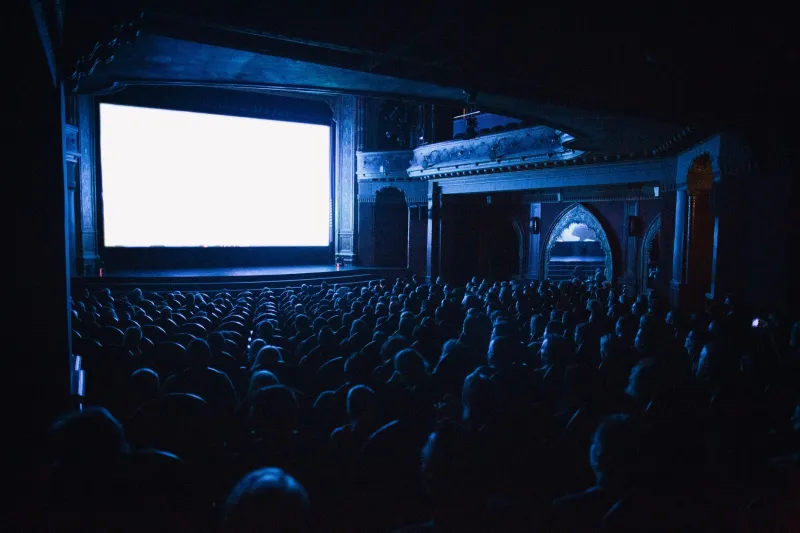
Somewhere in South Philadelphia, behind a metal door in a building that used to manufacture upholstery foam, about forty people are watching a film projected onto a sheet of white muslin stretched between two exposed pipes. The projector is a battered 16mm Bolex that the organizer hauled across two states in the back of a Subaru. There's no WiFi. There's no app. There's no comment section. There's just the film, the light, and the room — and the room is absolutely electric.
This is what distribution looks like when you stop caring about distribution.
Against the Algorithm
The dominant logic of independent film in 2024 goes something like this: make something, upload it, optimize it, promote it, watch the numbers, adjust, repeat. Every platform — YouTube, Vimeo, even the more curated corners of the internet — operates on the same fundamental premise that reach equals value and that attention is the product being sold.
A loose but growing network of filmmakers across the US has decided, quietly and without much fanfare, that this premise is broken. Not just inconvenient. Actually broken, in a way that corrupts the work itself.
"When I know something is going online, I make different decisions," admits Terrance Webb, a 28-year-old experimental director from Atlanta whose work blends documentary footage with abstract video synthesis. "I'm aware of thumbnail potential. I'm aware of runtime. I'm aware of whether the first thirty seconds will hold someone who's also checking Instagram. I hate that I do this. Physical screenings are the only context where I stop doing it."
Webb has screened his films in a decommissioned textile warehouse in Atlanta's West End, a basement gallery in Williamsburg, and — most recently — a church in rural Georgia whose congregation was more than happy to let the space be used on a Friday night. Each screening was announced through word of mouth and Signal messages. None were filmed for later distribution. None were livestreamed. When the event ended, the work ceased to exist as a public object.
The Irreproducible Experience
There's a concept in live music that applies here: the irreproducibility of a specific performance in a specific room on a specific night. The recording is never the thing. The thing is the thing. Film has largely abandoned this idea in the streaming era, treating cinema as a content object that can be perfectly reproduced and consumed anywhere, anytime, under any conditions.
The underground projection circuit is pushing back on that assumption hard.
In Minneapolis, a collective called Dim Frequency hosts irregular screenings in a basement space that seats — and this is a deliberate choice — no more than twenty people at a time. The intimacy is the point. Organizer and filmmaker Sasha Okonkwo describes the experience as "the opposite of YouTube in every meaningful way."
"When there are twenty people in a small room watching something together, you feel everyone's reactions. You hear someone hold their breath. You hear someone shift in their seat. The film is happening in the room — it's not just on the screen. That's a completely different relationship to the work than someone watching alone on their laptop at 2am."
Okonkwo's own films — dense, non-narrative pieces that combine archival footage with original 8mm material — have screened exclusively through this kind of circuit. She has no YouTube channel. She has no Vimeo. She has a mailing list and a reputation that travels through a network of people who care deeply about what they're watching.
The Politics of Physical Space
There's something genuinely political happening here that goes beyond aesthetics. Choosing physical projection over digital distribution is, at its core, a refusal of surveillance capitalism's grip on creative work. Every view on a commercial platform is a data point. Every watch is measured, analyzed, and fed back into systems designed to predict and shape future behavior — including the behavior of the creators themselves.
A projection in a basement produces no data. Nobody knows how many people came. Nobody knows how long they stayed. Nobody knows what they felt. That information lives only in the memories of the people who were there, and it's not for sale.
For filmmakers who care about this stuff — and increasingly, many do — that's not a small thing. It's a fundamental reorientation of what creative success means.
"I used to check analytics obsessively," says Webb. "Views, watch time, drop-off rates. It made me feel like a product manager, not a filmmaker. Now I measure success by whether the room felt alive. That's it. That's the whole metric."
The Logistics of Going Clandestine
Running underground screenings isn't without its complications. Venues need to be sourced — often through personal relationships with building owners, arts organizations, or sympathetic landlords who are willing to look the other way on occupancy permits. Projection equipment needs to be maintained and transported. Audiences need to be reached without the benefit of algorithmic amplification.
In practice, this means a lot of the labor falls on the filmmakers themselves, who become part promoter, part logistics coordinator, part community organizer. It's not glamorous work. But the people doing it describe it as inseparable from the creative practice itself — the screening is part of the film, not an afterthought.
In Austin, a loose collective of video artists called Fault Line has developed what they call a "projection infrastructure" — a shared inventory of projectors, screens, and audio equipment that any member can borrow for an event, along with a shared mailing list that's been carefully tended for three years. The network now reaches several hundred people across Texas who show up reliably when something is announced.
"We built something that the platforms couldn't give us," says Fault Line co-founder Maya Jimenez. "A real audience. People who come because they trust what we're doing, not because an algorithm served them a thumbnail."
What the Room Gives Back
Ask anyone who's organized or attended one of these screenings what keeps them coming back, and the answers converge on the same thing: presence. The experience of being fully present with a piece of work and with the people watching it alongside you.
That might sound simple. It isn't. In a media environment designed to fragment attention and monetize distraction, genuine collective presence is genuinely rare. The underground projection circuit isn't just distributing films — it's creating the conditions for a kind of watching that the mainstream has almost entirely abandoned.
The wall is the screen. The room is the medium. And for the filmmakers and audiences showing up to these clandestine events, that's not a compromise. It's the whole point.