Happy Accidents: The Broken Cameras and Failed Gear That Made Some of the Decade's Most Unforgettable Images
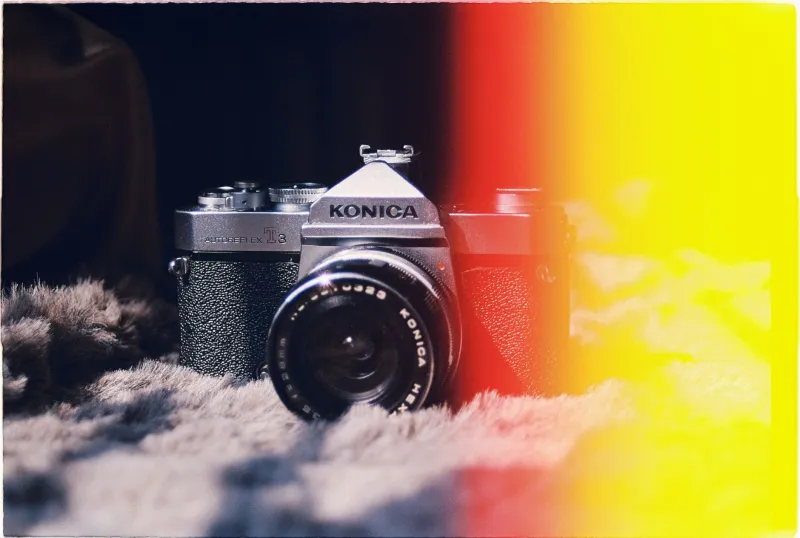
Let's start with the camera that started a career.
In 2019, a young filmmaker named Priya Samuels was shooting a short documentary about a community garden in East Oakland when her secondhand Canon 7D developed a sensor malfunction midway through the project. A vertical column of pixels on the right side of the frame started rendering in a blown-out, almost phosphorescent white — not consistently, but intermittently, flickering in and out depending on heat and ambient light. Any reasonable person would have sent the camera in for repair or borrowed a replacement.
Samuels kept shooting.
"It was doing something I couldn't have planned," she says. "The white column would appear during certain moments — usually when the light was intense or when there was a lot of movement. It started to feel like the camera was responding to the scene. Like it had an opinion."
The finished film, which screened at several Bay Area venues and eventually found an audience through a carefully curated online release, is marked throughout by that flickering column. It's disorienting at first. Then it becomes part of the visual logic of the piece — a kind of mechanical commentary running alongside the human story being told. Without the broken sensor, the film doesn't exist in its current form. A repaired camera would have produced something technically cleaner and creatively inferior.
The Repair Shop as Creative Enemy
There's a default assumption baked into professional creative culture that equipment should work correctly and that any deviation from correct function is a problem to be solved. Send it in. Get it fixed. Buy a new one. This assumption is so deeply ingrained that questioning it feels almost irresponsible — like arguing against wearing a seatbelt.
But a growing number of filmmakers and video artists are doing exactly that, and their work is making a compelling case that the assumption deserves to be questioned.
The argument goes something like this: perfect equipment produces predictable results. Predictable results, no matter how technically accomplished, tend toward a kind of visual sameness. Broken equipment, on the other hand, introduces variables that no operator fully controls — and those variables, when you learn to work with them rather than against them, can push images into territory that intentional technique rarely reaches.
This isn't a new idea. Experimental filmmakers have been exploiting equipment failure since at least the 1960s. What's new is how deliberately and systematically a generation of younger creators is pursuing it, and how central the philosophy of productive failure has become to their creative identity.
Case Studies in Productive Failure
Consider the stuck shutter. A camera shutter that doesn't fully open or close at the correct speed produces images with unusual exposure gradients — parts of the frame properly exposed, others dramatically over or underlit, the division between them sometimes sharp, sometimes gradual. In a functioning camera, this is a defect. In the hands of a filmmaker who understands what it's doing, it's a tool for creating images that feel internally divided, fractured, lit by more than one sun.
New York-based video artist Jordan Cleary has been working with a collection of mechanically compromised cameras for the past four years. His inventory includes a medium-format film camera with a shutter that fires at approximately half its rated speed, a digital mirrorless body with a sensor that overheats in direct sunlight and produces color shifts that drift from accurate toward the surreal, and a Soviet-era lens that was dropped at some point in its history and now produces a distinctive soft-focus bloom on the left side of the frame regardless of aperture.
"I know what each piece of gear does," Cleary explains. "I choose them based on what I'm trying to make. The slow shutter camera goes to shoots where I want that divided light feeling. The overheating sensor is for anything that needs to feel like it's melting, like reality is becoming unstable. The Soviet lens is for portraiture when I want one side of a face to feel like it's slipping away."
This is equipment failure as instrument. Cleary's workflow isn't about hoping something breaks. It's about deeply understanding what broken things do and deploying that knowledge with intention.
The Unpredictability Premium
Not every practitioner in this space is as systematic as Cleary. For many, the appeal of damaged gear is precisely that it can't be fully controlled — that it introduces genuine unpredictability into a creative process that might otherwise become too managed, too deliberate, too safe.
Filmmaker and video artist Tomás Ruiz, who works out of Albuquerque and shoots primarily on consumer camcorders from the late 1990s, describes his relationship to equipment failure as fundamentally collaborative. "I show up with gear I know is compromised in various ways and I let the shoot happen. The camera contributes things I didn't plan. Sometimes those contributions are noise — just garbage that doesn't work. But sometimes they're the most interesting thing in the footage. You develop a sense over time for which is which."
Ruiz's most recent project involved a camcorder with a failing CCD sensor that produced intermittent color dropout — sections of the frame randomly losing one color channel and rendering in a two-color palette that shifted unpredictably. The resulting footage looks like nothing a color grade could produce. It has the quality of something partially remembered, partially imagined — a visual language that emerged entirely from the camera's deteriorating internal machinery.
When the Fix Is the Problem
There's a deeper philosophical point lurking underneath all of this, and it's worth naming directly: the relentless pursuit of technical perfection may be actively hostile to creative discovery.
Every software update that eliminates a quirk, every firmware patch that corrects an anomaly, every replacement body that performs exactly as specified — these things make production more reliable and, often, more boring. The entire trajectory of camera technology over the past two decades has been toward greater accuracy, greater consistency, greater fidelity to some imagined standard of correct. And the images produced by that technology, for all their technical brilliance, increasingly look like each other.
Broken gear resists standardization by definition. It produces images that couldn't have come from anywhere else — not from any other camera, not from any other moment, not from any other combination of mechanical failure and human choice. That specificity, that irreproducibility, is exactly what the most interesting visual work is made of.
Samuels, whose career launched on the back of a malfunctioning sensor, puts it plainly: "I've worked with perfectly functioning cameras since then. The footage is fine. It's always fine. But fine isn't what I'm after."
The broken camera is, in this light, not a problem to be solved but a condition to be understood — a collaborator with its own aesthetic sensibility, its own unpredictable intelligence, its own way of seeing that no amount of engineering was ever going to produce. The acid rain falls where it wants. Sometimes it falls on your sensor. Sometimes that's the best thing that ever happened to your film.