Show It Anyway: Inside the Guerrilla Screening Circuit Where Experimental Video Actually Lives
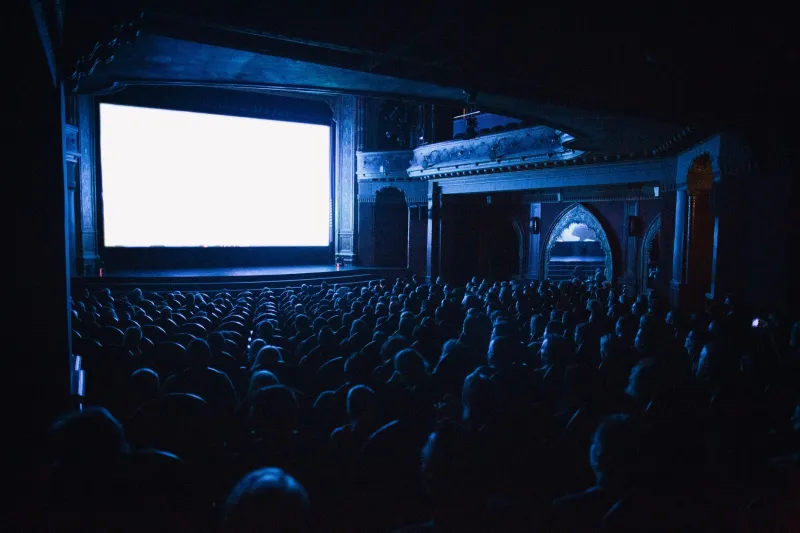
The invitation came as a voice memo. Forty-three seconds of someone describing a location in South Philly — a specific intersection, a specific door, a specific knock. No name attached. No title for the event. Just: "Thursday. After ten. Bring cash for the door, don't bring strangers." That's how you get into some of the most significant experimental video screenings happening in America right now.
The underground festival circuit for experimental visual art has always existed at the margins. But in the last few years, it's undergone a quiet transformation — from a loosely connected scatter of one-off events into something that functions more like an actual distribution network, with its own curators, its own critical vocabulary, and its own increasingly influential taste-making power.
Why the Mainstream Can't Hold This Stuff
Let's be direct about something: a lot of the work showing up at these underground screenings is genuinely difficult. Not difficult like "it's an art film with subtitles" difficult. Difficult like it might make you physically uncomfortable. Difficult like it refuses to end when you expect it to. Difficult like it's doing something to the image that you don't have language for yet.
Traditional film festivals, even the ones that pride themselves on supporting independent and experimental work, operate within constraints that make this kind of programming nearly impossible. There are liability concerns, sponsor relationships, press sensitivities, and audience expectations to manage. A 47-minute single-shot video of a television set slowly melting doesn't fit into a programming block. A piece that uses found footage in ways that might raise copyright questions doesn't make it past a festival's legal review.
"Sundance is not the enemy," says curator and filmmaker Josephine Park, who runs a biannual underground showcase in Chicago called Frequency Damage. "But Sundance is also not equipped to do what we do. We can show work that would give their lawyers a heart attack. We can show work that half the audience will walk out of. That's not a bug — that's the whole program."
The Spaces Themselves Are Part of the Work
One of the most consistent features of the underground screening circuit is the deliberate weirdness of its venues. Abandoned retail spaces. Parking structures after hours. The basements of bars that agreed to host something without being told exactly what it was. Church fellowship halls in neighborhoods where the congregation has dwindled to nothing. Converted shipping containers. Warehouse loading docks.
This isn't just resourcefulness, though it is partly that. The space is understood as part of the viewing experience. Watching a video about urban decay in an actual decaying building creates a feedback loop that no dedicated screening room can replicate. The ambient noise of a space — the hum of ventilation, the distant sound of traffic, the creaking of a building that wasn't designed to have a hundred people standing in it — becomes part of the soundtrack.
In Detroit, a collective called Signal/Noise has been staging screenings in decommissioned factory spaces, using the existing industrial architecture as projection surfaces. The video isn't projected onto a screen — it's projected onto exposed concrete, rusting metal, broken glass. The surface becomes an active collaborator in whatever's being shown.
The Curators Who Actually Matter
In this world, the curator is everything. These aren't programmers selecting from submission pools — they're figures with genuine critical vision and personal relationships with the artists whose work they champion. Getting a piece accepted by the right underground curator carries more weight in experimental circles than a mainstream festival selection, because the underground curator's judgment is understood to be uncompromised.
"I turn down probably ninety percent of what I see," says Marcus Webb, who curates a quarterly screening series in Brooklyn called Hostile Architecture. "Not because it's bad — sometimes I turn down things I think are incredible because they're not right for what I'm building. The program has to work as a single piece. Each video is in conversation with every other video in the show."
Webb's programming philosophy is typical of the serious underground curators: the screening is itself a work of art, with its own internal logic, pacing, and emotional arc. The order matters. The transitions between pieces matter. The total duration matters. This is fundamentally different from how mainstream festivals approach programming, where the logic is largely logistical.
How the Network Actually Functions
The underground screening circuit isn't a formal organization. There's no membership, no directory, no application process. It operates through overlapping personal networks, with information spreading through text messages, encrypted group chats, and word of mouth at other events.
But despite — or maybe because of — this informality, it functions with surprising consistency across cities. A filmmaker who screens work at a collective in Austin will likely get connected to a curator in Seattle. A video that causes a scene at an underground event in New York will find its way to a screening in Los Angeles within months. The circuit has its own form of distribution, its own version of critical buzz.
Some collectives have started maintaining informal archives — recordings of screenings, documentation of spaces, notes on audience responses. These aren't public-facing. They're internal records, passed between trusted members of the network. The idea of a permanent, searchable archive of underground experimental video feels philosophically wrong to most of the people involved. The ephemerality is part of the value.
The Audience as Active Ingredient
Attend enough of these events and you start to notice something about the audiences. They're not passive. They talk back — not rudely, but responsively. They move around during screenings. They leave and come back. They argue with each other during and after in ways that feel genuinely charged, like something actually matters here.
"I've seen screaming matches at our events that I genuinely think were more productive than most academic film criticism," says Park. "Someone hated something. Someone else thought it was the most important thing they'd ever seen. They're both right and they both know it and that's why they're yelling."
This is the thing that no streaming platform, no algorithm, no traditional distribution model can replicate: the experience of a room full of people who chose to be there, watching something difficult together, in a space that wasn't designed for comfort. The friction is the point. The underground screening circuit isn't a consolation prize for work that couldn't make it to the mainstream. It's the only place this work was ever going to live.