Pixel Rot: The Artists Who Turned Streaming's Worst Nightmare Into the Most Interesting Visual Language Online
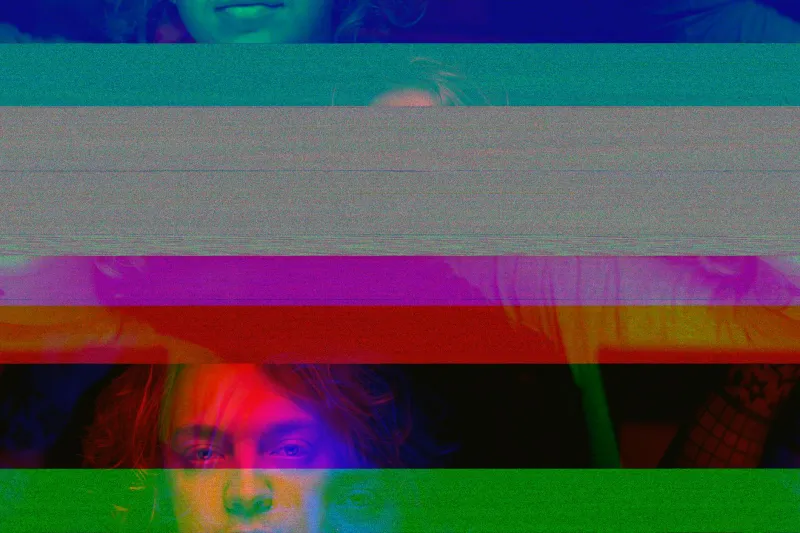
There's a specific visual experience that anyone who grew up watching YouTube in the late 2000s will recognize immediately: the moment a video buffers, the image freezes, and what's left is a mosaic of rectangular color blocks, smeared motion, and a kind of digital hallucination that bears only an abstract relationship to whatever the original footage contained. For most people, that's a loading problem. For a growing community of experimental video artists, it's a destination.
Deliberate compression degradation — the practice of intentionally destroying video quality through codec abuse, extreme compression settings, and engineered data loss — has quietly developed into one of the most sophisticated and philosophically loaded visual practices in contemporary experimental art. And it's happening almost entirely online, in the same streaming infrastructure that its practitioners are actively breaking.
Understanding What's Actually Happening
To appreciate what these artists are doing, it helps to understand the basics of what compression actually is. When you upload a video to any streaming platform, that video gets re-encoded — squeezed down to a smaller file size by an algorithm that decides what visual information is essential and what can be discarded. The algorithm is optimized for human perception: it preserves what the eye is most sensitive to and throws away what it thinks you won't miss.
Push that process to extremes — compress a video aggressively, then compress the compressed version, then compress that — and the algorithm starts making increasingly wrong decisions. Colors bleed into neighboring areas. Motion leaves ghost trails. Straight edges become jagged staircases of pixels. The image starts to look less like a degraded version of reality and more like a completely different kind of image: something that exists purely in the logic of the codec, with no relationship to the physical world the camera originally captured.
"I think of it as translation through a broken machine," says video artist and programmer Dani Reyes, 24, who works out of a studio apartment in Oakland. "The original footage is like a message. The codec is trying to translate it. But if you push the codec hard enough, the translation starts to take over. You end up with something that's more about the process of translation than about the original content."
The Techniques Are Getting Sophisticated
Early practitioners in this space were largely working by accident — discovering interesting results through trial and error, sharing screenshots and clips in Discord servers and Reddit threads. But the practice has matured considerably. There's now a body of shared technical knowledge about how to reliably produce specific kinds of degradation.
Datamoshing — the practice of deliberately removing keyframes from video files, causing the motion-prediction algorithms in codecs like H.264 to go haywire and apply motion data from one shot to the imagery of another — has been around long enough that it's developed its own subgenres. There's "clean" datamoshing, where the glitch is subtle and almost painterly. There's "aggressive" datamoshing, where the original image disappears almost entirely into smeared color fields.
Beyond datamoshing, practitioners are exploring codec-specific failures: the particular way that MPEG-2 handles high-contrast edges differently from H.265, the specific artifacts that emerge when you force a video through a series of incompatible codecs in sequence, the strange visual results of setting bitrates so low that the encoder has to make increasingly desperate decisions about what to keep.
"Different codecs have different failure aesthetics," explains Marcus Chen, a 22-year-old creator based in Chicago who posts work under the name @pixelrot__ on multiple platforms. "MPEG-2 failing looks completely different from H.264 failing. VP9 failing looks different from both of them. Learning those differences is like learning the tonal character of different instruments. You pick the codec based on what kind of decay you want."
Why Platforms Can't Stop It (And Sometimes Make It Worse)
Here's the genuinely funny part of this story: when creators upload deliberately compressed, degraded video to streaming platforms, those platforms then re-compress the already-compressed footage, adding a second layer of algorithmic decision-making to the already broken image. Sometimes this ruins the piece. Sometimes it makes it better. And sometimes it produces results the artist never anticipated and can't replicate.
This unpredictability is understood by many practitioners as a feature rather than a problem. The platform becomes an involuntary collaborator, applying its own transformations to work that was already about transformation. The final version of a piece — the one audiences actually see — has passed through multiple layers of algorithmic processing, each one adding its own particular form of damage.
"YouTube has done things to my videos that I could never have done myself," says Reyes. "I'll upload something and the platform's compression will interact with my compression in a way that creates this completely unexpected visual texture. I've started thinking of the upload as part of the creative process. You're handing the piece to the machine and seeing what comes back."
The Authenticity Argument
At the philosophical core of this practice is a specific claim about authenticity — one that's worth taking seriously even if you're skeptical of the aesthetic. The argument goes something like this: in an era of computational photography, AI upscaling, and platform algorithms that actively suppress visual imperfection, a truly authentic digital image is one that shows the marks of the processes that created and transmitted it. Hiding those processes — pretending that digital video is a transparent window onto reality — is the real artifice.
A heavily compressed, codec-abused video is, in this view, more honest than a clean 4K stream. It's not trying to disappear. It's not pretending to be neutral. It's showing you the seams of its own production, the evidence of the systems that processed it, the signature of every algorithm that touched it on its way to your screen.
"Clean video is lying to you," says Chen. "It's pretending that the camera is just capturing reality, that nothing is happening between the sensor and your eyeballs. But everything is happening. There's a whole chain of processing and compression and transmission that's shaping what you see. I'm just making that chain visible."
Where This Goes Next
The compression degradation community is already moving past the foundational techniques into territory that's harder to describe and harder to execute. Some practitioners are working with AI upscaling tools — running heavily compressed footage through neural network upscalers and then re-compressing the result, creating imagery that's been processed by both old codec algorithms and new machine learning systems simultaneously. The results are genuinely strange: images that are simultaneously hyper-detailed and completely wrong, that have the surface texture of high-resolution video and the underlying logic of something deeply broken.
Others are exploring live performance — streaming sessions where the degradation process happens in real time, with audiences watching the image decay as the stream itself struggles with its own bandwidth limitations. The buffering isn't a technical problem. It's the piece.
What's clear is that this practice has moved well past the point where it can be dismissed as a trend or a gimmick. The technical knowledge is too developed, the aesthetic vocabulary is too specific, and the philosophical argument is too coherent. Pixel rot has become a legitimate medium — one that exists entirely within the infrastructure it's critiquing, and one that's producing some of the most genuinely strange and genuinely alive visual work happening anywhere online right now.