Chemical Chaos: How Gen Z Filmmakers Are Weaponizing Film's Flaws Against the Digital Machine
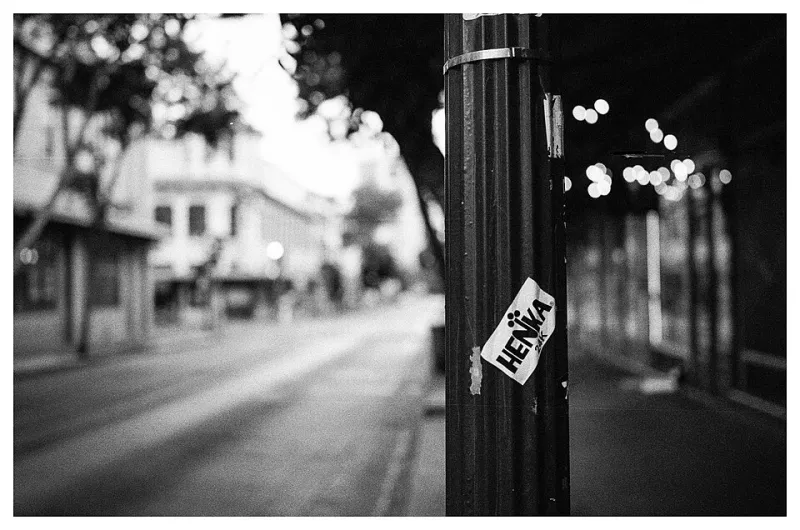
Photo: Salty Lens (Jonny), CC BY 4.0, via Wikimedia Commons
There's a roll of 35mm film sitting in a refrigerator in a cramped apartment in East Nashville. It expired in 2009. The person who bought it — a 23-year-old video artist named Dani — paid eleven dollars for it at a flea market and has no idea what it's going to do to her footage. That's exactly the point.
"I want the film to make decisions I can't predict," she says. "Every algorithm I've ever dealt with is trying to flatten surprise out of existence. This is the opposite of that."
This is the analog rebellion. And it's not nostalgic. It's not retro-chic. It's not a TikTok filter pretending to be something it isn't. It's a generation of filmmakers and video artists actively seeking out the places where the medium breaks down — and planting their flags there.
The Failure Is the Feature
Let's be clear about what we're talking about. Expired film stock doesn't just add a "vintage look." It degrades in ways that are genuinely unpredictable — color shifts that border on hallucinatory, grain that clumps and blooms like something biological, emulsion that separates and bleeds. Light leaks burn through frames like small fires. Chemical processing gone sideways produces streaks, blotches, and color inversions that no plugin has ever convincingly replicated.
These aren't aesthetic choices you dial in on a slider. They're the result of surrendering control to physics, chemistry, and time itself.
For a generation raised on content that's been smoothed, stabilized, color-graded to clinical precision, and optimized for maximum retention, that surrender feels radical. It feels honest in a way that a perfectly composited shot simply doesn't.
And more and more young creators are chasing it — not despite the unpredictability, but because of it.
Against the Algorithm's Idea of Beautiful
Here's the thing about computational perfection: it has a face, and by now everybody knows what it looks like. The hyper-sharpened detail. The noise-free shadows. The skin tones smoothed into something that technically exists but feels like it was generated by a system trained on the concept of a human rather than an actual one.
Algorithms don't just recommend content — they quietly shape what gets made. Creators learn, consciously or not, that certain visual qualities perform better. Clarity. Brightness. Faces that read well on a small screen. Over time, the feed starts to look like it was all made by the same invisible hand.
Analog failure is a direct attack on that hand.
When a light leak scorches through the corner of a frame, it's not optimized for anything. It doesn't test well. It might ruin the shot — or it might make the shot the only thing you remember from the entire video. That unpredictability is, itself, a kind of politics. It says: this was made by a person, in a specific moment, with materials that have a history. It cannot be reproduced exactly. It will not be.
Broken Projectors and Deliberate Destruction
The movement goes beyond just shooting on old film. Some creators are introducing damage at every stage of the process.
There are filmmakers in Brooklyn and Portland and Austin who are deliberately running their footage through broken projectors — machines with bent gates, flickering bulbs, sticky mechanisms — and re-photographing the results. Others are doing chemical experiments directly on their negatives: bleach, coffee, vinegar, and combinations they're figuring out as they go. The results look like nothing a camera was ever supposed to produce. They look like evidence of something.
One video artist working in Chicago describes a process she calls "controlled drowning" — submerging developed film in water for varying amounts of time, watching the emulsion lift and migrate, then scanning what's left. "Sometimes I lose everything," she says. "Sometimes I get something I couldn't have imagined. I've stopped being afraid of either outcome."
That fearlessness is key. The digital workflow is structured around the elimination of loss. You can always undo. You can always revert. The analog destruction practice is structured around the opposite principle — irreversibility. What happens, happens. The willingness to risk the whole thing is what gives the result its weight.
The Authenticity Arms Race
There's a cynical read of all this, and it's worth addressing directly: isn't this just aesthetics? Isn't "authentic imperfection" just another look, another trend cycle, another thing that'll get absorbed into the mainstream and sold back to us as a preset?
Maybe. Trend cycles are real, and the visual language of underground movements does get co-opted — it always has. But there's something different happening here that makes the cynical read feel insufficient.
The creators driving this movement aren't just after a look. They're after a process. The point isn't to produce footage that resembles expired film — it's to actually shoot expired film, to actually destroy the negative, to actually not know what you're going to get. The experience of making it is inseparable from what the thing is.
That's not something a filter can fake, because the filter isn't the point. The risk is the point. The irreversibility is the point. The conversation with materials that have their own agenda — that's the point.
A plugin gives you the appearance of surrender without the actual loss. And right now, actual loss might be the only thing that still means something.
What Failure Looks Like When It Works
Spend any time in the corners of the internet where this work actually lives — not the algorithm-curated feeds, but the Vimeo pages and the physical screenings and the zines — and you start to see what's possible when creators stop trying to prevent failure and start trying to understand it.
There are music videos shot on film stock so degraded the faces of the performers are barely legible, the image more impression than record, and somehow that makes the emotional content more present, not less. There are short films where a chemical accident turned a single frame into something that looks like a wound, and the director kept it in because pulling it would have been dishonest.
This is what Acid Rain Video exists to amplify: the work that couldn't have been made any other way, by people who understood that the breakdown was the breakthrough.
Dani's roll of expired film from that East Nashville refrigerator? She shot it last month. She hasn't processed it yet. "I'm kind of scared to," she admits. "But that's how I know it matters."
That's the whole thing, right there. The fear that it might not work. The decision to do it anyway. The understanding that the accident, when it comes, will be more true than anything she could have planned.
The algorithm will never feel that way about anything.