Burn Rate: The Gen Z Filmmakers Spending Their Last Dollar on Film Stock and Not Apologizing for It
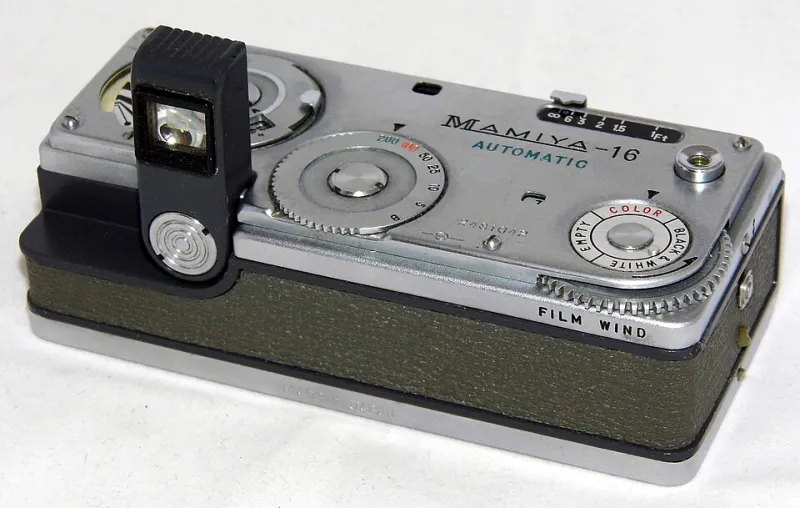
Photo: Joe Haupt from USA, CC BY-SA 2.0, via Wikimedia Commons
Let's be honest about the math for a second. A single 400-foot roll of 16mm film runs you somewhere between $80 and $130 before you've even thought about processing and scanning — which can tack on another $100 to $200 depending on where you're sending it. For a short music video, you might blow through three or four rolls easy. That's potentially $600 to $1,200 spent before you've touched an edit bay, on a format that gives you no playback, no instant review, no do-overs that don't cost actual money.
And yet there's a whole generation of filmmakers doing exactly this. Choosing it. Budgeting for it. Scraping together cash from odd jobs and crowdfunding to feed cameras that haven't been in regular production for decades. If that sounds irrational, you haven't been paying attention to what's happening at the edges of independent visual culture right now.
The Problem With Free
Here's the thing nobody in the digital-first conversation wants to say out loud: when something costs nothing to capture, it often ends up meaning nothing to look at. The infinite takes, the instant playback, the color correction that can fix almost anything in post — all of that freedom has quietly drained urgency out of a lot of contemporary filmmaking. You can always try again. You can always fix it later. And that safety net, paradoxically, makes a lot of footage feel exactly like what it is: content made without stakes.
Film doesn't work that way. Film is a negotiation. Every frame you expose is a small, irreversible financial decision, and that changes how you move through a shoot. Directors who work in analog will tell you the same thing: you slow down. You think before you roll. You commit to a composition instead of hedging your bets with seventeen angles you'll sort out later. The limitation isn't a bug — it's the entire point.
There's also something happening at the photochemical level that no plugin has genuinely replicated, no matter how good the film grain emulation gets. Real film latitude, real halation, the way highlights bloom and shadows hold texture — these aren't just aesthetic preferences. They're physical phenomena produced by light interacting with silver halide crystals in ways that are, by definition, unrepeatable. Every roll is slightly different. Every frame is a one-time event.
Expired, Found, and Frankenstein'd
One of the more fascinating subplots in this analog revival is how creative the sourcing has gotten. New film stock at retail prices is genuinely prohibitive for most indie budgets, so a whole informal economy has sprung up around alternatives. Expired film — stock that's been sitting in someone's freezer for ten, twenty, sometimes thirty years — trades hands on eBay, on Reddit's r/analog, through Instagram DMs, and at camera swaps in cities like Brooklyn, Chicago, and Los Angeles. The degradation that comes with age isn't treated as damage. It's treated as collaboration.
Expired Kodak Vision3 from 2009 might give you color shifts you couldn't dial in intentionally. Old Fuji stock might introduce grain structures that feel genuinely alien against modern subjects. Directors are leaning into this unpredictability, building it into their visual language rather than fighting it. The film becomes a co-author.
Found footage is another avenue — thrift stores, estate sales, and film archives occasionally surface exposed but unprocessed rolls, or old home movie footage that can be repurposed and re-edited into something entirely new. There's an ethical and artistic conversation happening around this practice, about authorship and appropriation, but the results can be extraordinary: images that carry the literal weight of time, that couldn't exist any other way.
Community as Infrastructure
Because analog filmmaking is expensive and technically demanding, it's also generated something that pure digital workflows rarely do: genuine community. Across the country, informal networks of filmmakers are pooling resources, sharing camera bodies, splitting the cost of lab runs, and teaching each other how to load magazines in the dark. In cities with active scenes — New York, LA, Atlanta, Austin — you'll find collective darkrooms, shared camera lending libraries, and group processing runs that bring the per-roll cost down to something survivable.
Online, communities on Discord and Letterboxd and scattered subreddits function as both technical support and creative incubators. Someone in Portland will post a question about pushing Kodak Double-X two stops and get fifteen detailed responses within an hour. Someone in Detroit will share a frame grab from a test roll and spark a two-day conversation about exposure philosophy. The friction of the format has created friction in the best sense — the kind that generates heat, that sparks real exchange.
This is genuinely different from the isolated bedroom-producer model that defines so much digital content creation. Analog filmmaking, almost by necessity, pulls people into rooms together.
What It Looks Like When It Lands
Watch a music video shot on 16mm by a director who actually understands what they're working with, and you'll feel the difference before you can articulate it. There's a presence to the image — a density, a sense that something real happened in front of a lens. The light doesn't look processed. The faces don't look corrected. The mistakes that made it through — a soft focus pull, a slightly blown highlight, a frame that catches something accidental — read as evidence of a real moment rather than a simulation of one.
For artists whose music lives in emotional specificity, that kind of visual authenticity is worth the cost. A folk singer-songwriter doesn't want their video to look like a tech demo. An experimental noise artist doesn't want their visual component to feel cleaner than their sound. Film offers a texture that matches the music — that feels made by human hands under real pressure.
The Luxury of Inconvenience
There's an irony worth sitting with here. In 2024, choosing film is in some ways a privilege — it costs more, takes longer, and requires access to gear and labs that aren't evenly distributed across geography or economic background. The analog revival is doing some genuine work to democratize that access through community lending and collective resources, but it's not fully there yet.
What's interesting, though, is the inversion of the usual luxury logic. These filmmakers aren't choosing film because it's easier or more comfortable. They're choosing it precisely because it's harder — because the inconvenience forces a kind of intentionality that their digital workflows don't demand. The expense isn't incidental. It's the mechanism. When every frame costs real money, you stop making frames that don't mean anything.
That's a different relationship to image-making than most of us have developed in the era of unlimited storage and instant capture. And watching the work that comes out of it, you start to wonder what we've been trading away for all that convenience.
Some things, it turns out, only show up when you're willing to pay for them — literally.