Dead Machines, Alive Again: The Gen Z Obsession With Gear That Was Never Supposed to Work This Way
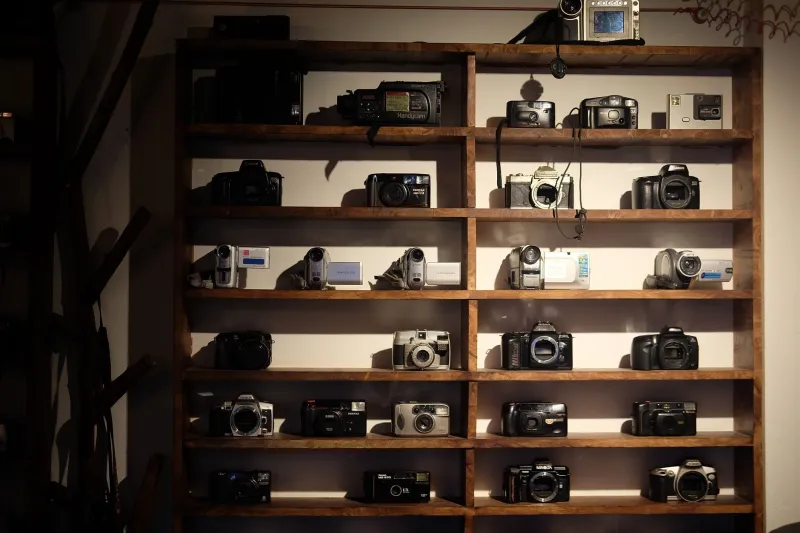
There's a particular kind of thrill that comes from plugging in a camcorder you found in a box at a garage sale and watching it do something completely unhinged to the image. The colors bleed sideways. The scan lines multiply. The audio drops into a low, mechanical moan. For most people, that's a broken camera. For a growing cohort of Gen Z experimental filmmakers, that's a finished film.
The hunt for malfunctioning, obsolete, and outright dead video equipment has quietly become one of the defining underground movements in American experimental visual art. These aren't collectors chasing nostalgia. They're creators actively seeking gear that fails — preferably in ways nobody can predict or replicate.
The Supply Chain Nobody's Talking About
Start at the obvious end: eBay. Search "VHS camcorder for parts" or "broken JVC VCR" and you'll find hundreds of listings, most priced between five and forty dollars, most sold by people who have no idea what they're throwing away. Filmmakers like Maya Delacroix, a 23-year-old video artist based in Detroit, have turned this into a near-daily ritual.
"I check eBay every morning the same way some people check the news," she says. "I'm looking for something specific — not just broken, but broken in an interesting way. Water damage is great. Heat damage is incredible. Anything that's been stored in a shed for fifteen years has potential."
Beyond eBay, the supply chain gets more interesting. Pawn shops in mid-sized American cities — particularly in the Rust Belt and the South — remain goldmines for obsolete broadcast and prosumer equipment. Thrift stores in college towns regularly receive donations from estates clearing out media rooms. And then there's the network of artist collectives and online communities where gear gets passed around, traded, or gifted specifically because it's developed a unique malfunction.
The r/AnalogCommunity subreddit has entire threads dedicated to sourcing "character" equipment. Discord servers with names like Glitch Depot and Dead Signal Pool function as informal marketplaces where someone in Columbus might ship a half-dead Panasonic AG-455 to someone in Portland who's been looking for exactly that model's particular tracking failure.
Why Failure Is the Feature
The philosophical argument here isn't subtle, but it's genuinely compelling. In a media landscape where every piece of consumer hardware is engineered toward invisible perfection — where your phone's camera actively fights against any visual imperfection through computational photography — choosing tools that fail is a form of resistance.
"The algorithm wants clean," says Terrence Okafor, a 25-year-old filmmaker from Atlanta who works primarily with damaged Hi8 camcorders. "It rewards clean. Clean gets boosted. But clean is also completely sterile. When I shoot on a camera that's half-dead, I'm making something the algorithm literally cannot optimize for, because it doesn't know what it's looking at."
This isn't just aesthetic posturing. There's a material reality to it. Damaged analog equipment produces artifacts — color shifts, sync errors, ghosting, signal dropout — that are genuinely unreproducible through digital filters. You can approximate VHS decay in After Effects. You cannot approximate the specific way a particular broken VCR head drum warps a specific tape recorded on a specific afternoon. That unreproducibility is the whole point.
The Broken Projector as Instrument
It's not just cameras and VCRs. A significant part of this movement involves defunct projection systems — 16mm projectors with damaged gate mechanisms, slide projectors with failing lamp assemblies, overhead projectors repurposed for live performance. In Chicago's underground performance scene, several collectives have built entire event formats around projection equipment that's expected to fail mid-show.
The Deteriorating Image Collective, which operates out of a warehouse space in Pilsen, holds monthly screenings where every piece of projection equipment used has been sourced damaged and is run until it quits. "We've had projectors catch fire," says one of the collective's organizers, who goes by the name Solder. "That's not a disaster. That's the piece completing itself."
This ethos extends to broadcast gear — old switchers, time base correctors, and sync generators pulled from decommissioned local TV stations, community access facilities, and corporate media rooms that got gutted during the streaming transition. Broadcast equipment from the 1980s and 90s, designed to maintain signal stability, becomes wildly expressive when it starts to fail. The very systems built to eliminate visual noise become noise generators.
The Market Is Getting Competitive
Here's the uncomfortable truth for anyone who wants to get into this: the market for "interestingly broken" analog equipment is heating up fast. What cost ten dollars on eBay three years ago now costs forty. Pawn shop owners in cities with active art scenes have started to notice that certain kinds of old video equipment moves faster than it used to, and some have started pricing accordingly.
There's also a secondary market emerging in "pre-broken" equipment — sellers who deliberately damage gear before listing it, which is exactly as annoying as it sounds. The community has developed a fairly sophisticated nose for this. Organic damage has a character that intentional damage doesn't. A camera that got left in a hot car for a summer behaves differently than one someone ran a magnet over.
The real currency in this world isn't money — it's knowledge. Knowing which models fail in which ways, which failure modes produce usable results versus just destroying the tape, which repair shops will deliberately under-repair a unit to preserve its character — that's the expertise that separates a serious practitioner from someone who just bought a broken camera because it looked cool.
What It Sounds Like When the Machine Gives Up
There's an audio dimension to all of this that often gets overlooked. Damaged video equipment doesn't just distort images — it distorts sound in ways that are equally unreproducible. The specific flutter of a worn tape transport, the hum of a failing power supply, the way a dying VCR head introduces a kind of rhythmic warble into whatever audio is passing through it — these have become sonic signatures as recognizable to experimental video communities as specific guitar pedals are to musicians.
Some filmmakers are now using damaged video equipment purely as audio processors, running sound through broken VCRs to introduce the machine's particular form of decay into the signal. The image barely matters. The machine's failure is the instrument.
That might be the clearest expression of what this whole movement is actually about. It's not nostalgia. It's not anti-technology luddism. It's the recognition that a machine at the end of its life, doing things it was never designed to do, is capable of producing something genuinely alive — something that no amount of clean, optimized, algorithm-friendly production can touch.