Hard to Watch, Impossible to Forget: The Experimental Filmmakers Who Make Discomfort the Point
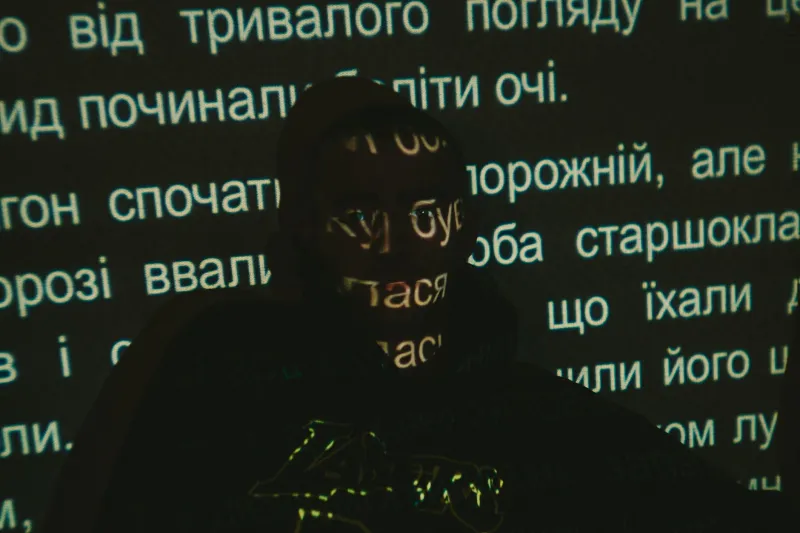
You're three seconds into a video and you already want to look away. The audio is clashing against itself. The frame keeps cutting to black before anything resolves. Whatever's happening on screen refuses to organize itself into something your brain can file away and forget. You stick with it anyway—partly out of stubbornness, partly because something won't let you leave.
That friction? That's not a bug. That's the whole architecture.
A loose but fiercely intentional movement of experimental filmmakers and video artists is building work that directly antagonizes the reflexes binge culture has spent a decade training into all of us. They're not making difficult work by accident or out of some misguided ambition. They're making it on purpose, with precision, because they've decided that the most honest response to a world drowning in frictionless content is to introduce as much resistance as possible.
Rewiring the Reflex
The scroll is a muscle memory now. We don't decide to skip something—our thumbs just do it. Platforms have spent billions of dollars making consumption as automatic as breathing, and the result is an audience that's been effectively trained to abandon anything that doesn't deliver immediate reward.
So what happens when a filmmaker decides to work against that training?
Take the approach that video artist and director Mara Sloane has been developing out of her Chicago studio. Her recent short pieces run anywhere from eleven minutes to over an hour, structured around what she calls "temporal punishment"—the deliberate withholding of resolution for so long that the viewer either bails or undergoes something closer to a reckoning.
"I'm not trying to bore people," she's said in conversations with peers in the experimental space. "I'm trying to find out who's still there after the boredom passes. Because that's when something real can actually happen."
Her work uses long static takes of mundane environments—parking structures, fluorescent-lit hallways, the corner of a room where a window meets a wall—interrupted by sudden, jarring sonic events that never quite sync to anything visual. It's designed to prevent the viewer from getting comfortable, which in turn prevents them from going passive.
Duration as Weapon
Time is one of the most underused tools in the experimental filmmaker's kit. We've been conditioned to think that shorter is sharper, that editing down is editing better. The new wave of deliberately difficult directors is calling that assumption out as the ideological position it actually is.
Los Angeles-based filmmaker and video artist Dex Morales has been building a reputation—and a genuinely devoted cult following—on the back of work that refuses to operate within acceptable runtime parameters. His video pieces for underground musicians regularly clock in past the thirty-minute mark. His most discussed piece, made for a noise project out of the Pacific Northwest, runs forty-seven minutes and consists almost entirely of a single deteriorating image layered over field recordings that gradually become unrecognizable.
"Duration is the first filter," Morales explains. "Anyone who makes it to minute twenty is a different kind of viewer than someone who clicks off at two. I'm not interested in making something for the person who clicks off at two. That's not my audience. My audience is whoever's still sitting in the acid rain."
That phrase—sitting in the acid rain—lands differently when you've actually experienced one of his pieces. The discomfort isn't punishing for its own sake. It accumulates into something that feels, by the end, almost like catharsis.
Narrative Fragmentation and the Anti-Story
Beyond duration, some of the most provocative work in this space is attacking the very structure of storytelling itself. The three-act arc, the emotional through-line, the satisfying conclusion—these are the load-bearing walls of mainstream video content, and a growing number of directors are taking sledgehammers to all of them.
New York-based collective Frame//Break has been producing music videos and short visual pieces that deliberately destroy their own narratives mid-construction. Characters appear once and vanish. Dialogue is looped until it becomes pure sound. Scenes that seem to be building toward something abruptly cut to unrelated footage with no transition or explanation.
"We're trained to chase meaning," says one of the collective's founding members, who goes by the name Rell. "Put anything in front of an audience and they will find a pattern, invent a story, impose structure whether it's there or not. We're interested in what happens when you exhaust that reflex. When the brain finally stops trying to solve the puzzle and just experiences the thing."
The results are legitimately unsettling in the best way—work that creates a specific kind of cognitive friction that mainstream video content is engineered to eliminate entirely.
Sensory Assault as Invitation
Not all deliberately difficult work operates through restraint and duration. Some of it goes the other direction entirely—piling on stimulation until the viewer's perceptual defenses collapse.
Artist and director Yolanda Voss, working out of Detroit, makes videos that function almost like sensory stress tests. Rapid-fire image sequences, layered audio that sits right at the threshold of tolerable volume, color grading pushed so far past natural that skin tones become abstract. Her work has been described, not inaccurately, as "being inside a migraine that turns beautiful."
Voss is unapologetic. "We've all been so carefully managed by every piece of media we consume. Everything is smoothed out, mixed down, color corrected into palatability. I want to make something that your body actually reacts to. I want a physical response. I want the discomfort to be real."
The paradox her work embodies is the same one running through all of this: the more genuinely uncomfortable something makes you, the harder it is to dismiss. Passive viewing becomes physiologically impossible. You're forced into presence.
Why This Matters Right Now
There's a reason this particular strain of experimental filmmaking feels urgent in 2024 and not just academically interesting. We are living inside the most refined content-delivery system ever built, and it is explicitly designed to keep us consuming without engaging, watching without seeing, scrolling without stopping.
These filmmakers are building the opposite of that. They're making work that demands something back. Work that won't let you be a passive recipient. Work that—by being genuinely, deliberately, architecturally hard—creates the conditions for a real encounter between the viewer and the piece.
Is it for everyone? Absolutely not. That's kind of the point.
But for anyone who's felt the creeping numbness that comes from too much frictionless content—too many perfectly paced series, too many algorithmically optimized music videos, too many things that slide down easy and leave nothing behind—this work lands like a cold shock to the system.
Sometimes the most generous thing a filmmaker can do is refuse to make it easy for you.