Screens Are So Over: How Gen Z Musicians Are Blowing Up the Music Video and Building Something Weirder
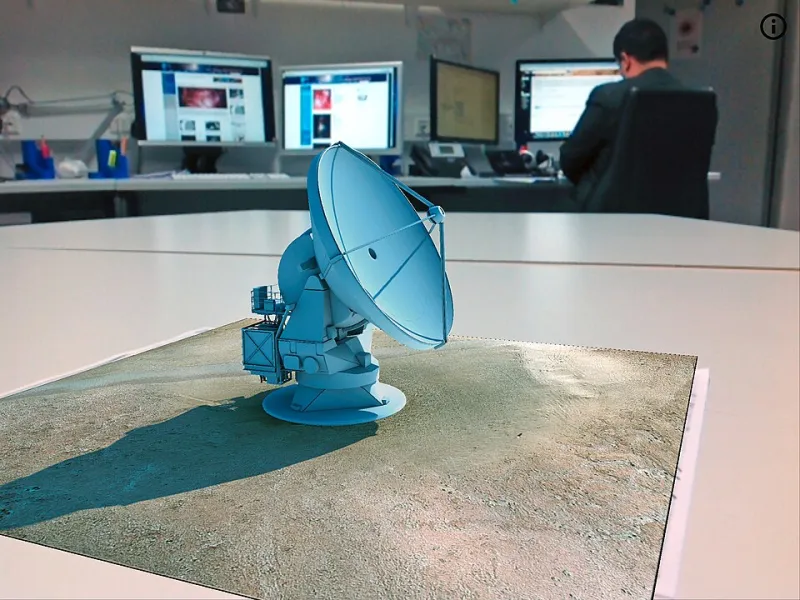
Photo: Bridge/ESO, CC BY 4.0, via Wikimedia Commons
There's a moment in a lot of music videos where you can feel the budget. The crane shot. The color grade that costs more than your rent. The choreography that took three days to perfect. And for decades, that moment was the point — proof that an artist had arrived, that a label had invested, that the whole machine was humming along just fine.
Gen Z doesn't care about that moment. In fact, a growing number of artists under 30 are treating it like a red flag.
What's replacing the traditional music video isn't one thing. It's a sprawling, glitchy, sometimes beautiful mess of interactive livestreams, augmented reality drops, TikTok-native visual albums, and experimental platform experiments that don't have a name yet. If the MTV era was about spectacle, and the YouTube era was about access, whatever we're entering now is about collapse — collapsing the line between artist and audience, between performance and participation, between a song and the experience of living inside it.
The YouTube Premiere Is Dead (It Just Doesn't Know It Yet)
Ask any artist under 25 what they actually think about the YouTube premiere format and you'll get some version of the same answer: it feels like showing up to a party that ended two years ago.
The numbers back that up. Organic music video discovery on YouTube has been quietly cannibalizing itself for years, with algorithm changes pushing viewers toward shorts and away from anything over three minutes. Labels still pour money into traditional video production, but engagement metrics tell a different story — audiences are fragmenting, attention is moving, and the static viewing experience of sitting down to watch a music video from start to finish feels increasingly out of step with how people actually interact with music.
Emerging Brooklyn-based producer and visual artist Mara Soleil, who releases under the name Glass Lung, put it plainly in a recent Discord chat with her fanbase: "A music video is someone else's vision of your song. I want people inside the song. That's a different thing entirely."
Soleil's last release didn't include a video at all. Instead, she dropped an AR filter on Instagram that mapped her album's visual language — degraded film textures, warped botanical imagery, handwritten lyrics — onto whatever surface the viewer pointed their phone at. Over 40,000 people used it in the first week. Zero dollars went to a director.
AR, AI, and the Chaos Aesthetic
Augmented reality is having a genuine moment in independent music, and not in the polished, brand-partnership way that tech press tends to cover it. Artists are using AR tools that are messy, accessible, and weird — Spark AR, Effect House, even hacked-together custom filters — to create experiences that live in the physical world rather than on a screen.
For a generation that grew up watching CGI become indistinguishable from reality and then watched reality become indistinguishable from performance, there's something genuinely radical about an art experience that insists on being located. You're not watching the video. The video is happening in your kitchen.
Then there's the AI angle, which is more complicated and more interesting than the discourse usually allows. A handful of experimental artists are using generative tools not to replace human creativity but to introduce genuine unpredictability into their visual output. Los Angeles-based artist collective Soft Static has been releasing what they call "living visuals" — AI-generated video loops that respond in real time to streaming data, weather patterns, and listener location. Every person who hits play sees something slightly different. The visual is never the same twice.
"We're not interested in making something perfect," said one of the collective's members in an interview with an underground music blog last fall. "We're interested in making something alive."
The Livestream as Canvas
If there's one format that's genuinely eating the traditional music video's lunch, it's the experimental livestream. Not the pandemic-era "concert from my living room" variety, but something stranger and more intentional — performances that are built specifically for the live digital format, that use the tools of streaming (chat, real-time interaction, algorithmic unpredictability) as actual creative elements.
Artist and producer Fen Nakamura, based out of Chicago, has been building what she describes as "score-based streaming events" — live performances that include visual instructions for the audience, real-time collaborative drawing tools, and sound that shifts based on collective chat inputs. Her last event drew over 8,000 concurrent viewers on Twitch, most of whom had never heard of her before the stream was recommended by the algorithm.
"The algorithm is part of the piece," she explained. "Who shows up is random. What they do changes the sound. I'm not controlling it. I'm just setting conditions."
This is a fundamentally different relationship to visual storytelling than anything a traditional music video offers. The director isn't the auteur. The artist isn't even the auteur. The audience is. Or the system is. Or nobody is, which might be the most interesting answer.
What the Labels Are Missing
Here's the uncomfortable commercial truth underneath all of this: major labels are still largely optimizing for a discovery and monetization model that assumes the music video is the primary visual artifact of a release cycle. The budget flows toward directors, treatments, distribution deals with YouTube and Vevo, and press rollouts built around a premiere moment.
But the artists generating the most genuine cultural heat right now aren't living in that model. They're building audiences on Discord, releasing visual content natively on platforms that don't pay out royalties in any traditional sense, and treating every format — AR filter, AI loop, interactive stream — as a potential touchpoint rather than a product.
The labels will catch up. They always do, usually about three years after the interesting part is over.
The Future Doesn't Look Like Anything Yet
What's exciting about this moment — and what makes it feel genuinely different from previous waves of "the music video is dead" discourse — is that there's no consensus replacement. The artists abandoning traditional formats aren't all running toward the same thing. They're running in ten directions at once, experimenting with tools that didn't exist two years ago, building audiences in spaces that don't have established rules yet.
That's chaotic. It's also, if you've been paying attention to where the most interesting visual work comes from, exactly where things should be.
The music video had a good run. It gave us "Thriller." It gave us the entire visual vocabulary of MTV. It gave us a thousand directors who went on to make actual films. But a format built for a world of three television channels and a monoculture that no longer exists was always going to crack eventually.
What's growing through those cracks is weirder, more participatory, and considerably harder to monetize. Which, honestly, sounds about right.