Cut, Splice, Repeat: The Young Filmmakers Trading Their Laptops for Tape Decks and Razor Blades
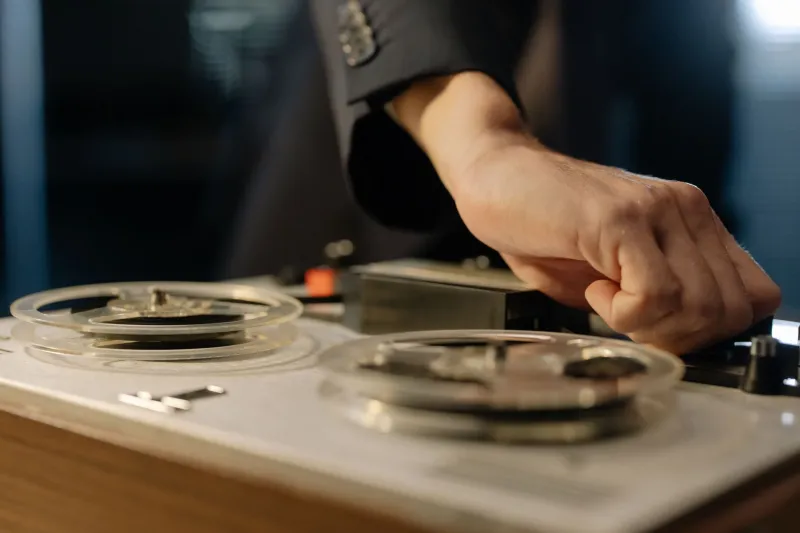
There's a particular kind of silence in a room where someone is editing on tape. No fan noise from an overheating MacBook. No notification pings. Just the soft mechanical pull of magnetic ribbon through a reel-to-reel deck and the deliberate, almost surgical drag of a razor blade across a splice block. For a generation raised on infinite undo buttons and AI-assisted color grading, that silence is apparently deafening — and completely addictive.
Across the country, from converted garages in Detroit to cramped Brooklyn apartments, young filmmakers are ditching digital editing suites and going physical. Not as a gimmick. Not as a throwback aesthetic for TikTok clout. As a genuine, deeply committed practice that's reshaping how a growing underground cohort thinks about time, rhythm, and the actual substance of moving images.
Why Throw Away the Undo Button?
The first question anyone asks is the obvious one: why would you give up the safety net? Digital editing is forgiving by design. You can try a thousand cuts, revert to any version, and never lose a single frame. Tape doesn't work like that. A bad splice is a bad splice. You feel it, literally — the slight resistance of the blade, the smell of the adhesive tape holding two pieces of magnetic film together — and if you mess it up, you live with the consequences or you start over.
For filmmakers like Dani Reyes, a 23-year-old director based in Chicago who works primarily with 3/4-inch U-matic tape, that's not a limitation. That's the whole point.
"When I'm editing digitally, I'm basically shopping," she says. "There are so many options that I end up making safe choices because I'm paralyzed. With tape, I make a cut and it's done. The decision has weight. That weight shows up in the final piece."
Reyes shoots on consumer-grade camcorders from the late '80s and edits using a combination of two VCRs and a physical splice block she found at an estate sale in Evanston. Her work — fragmented, temporally unstable short films that have screened at a handful of Midwest art spaces — looks like nothing coming out of any film school right now. The edits breathe differently. They stutter and lurch in ways that feel earned rather than programmed.
The Meditative Grind
There's a monastic quality to tape-based editing that nobody who hasn't done it can fully appreciate. You're not scrolling through a timeline. You're physically handling time. Every foot of tape represents a specific duration — you develop an almost bodily sense of how long a shot runs just by feeling the weight of the reel in your hands.
Marco Vidal, a 26-year-old experimental filmmaker out of Los Angeles who documents the city's underground music scene, describes his editing sessions as closer to meditation than production work. "I put my phone in another room. I have my decks, my tape, my splice blocks. I'm in there for hours and I lose track of time completely. That never happened when I was editing on a computer. There was always something pulling me out of it."
Vidal's process involves recording footage to VHS, then physically cutting the tape and reassembling it in a sequence he's mapped out by hand on paper — actual paper, with a pen — before ever touching the editing deck. The planning is analog. The execution is analog. The result is a visual language that carries the marks of every decision he made along the way.
This isn't about nostalgia. Neither Reyes nor Vidal grew up editing on tape. They chose it as adults, deliberately, after spending years in digital workflows that felt frictionless in the worst possible way.
Imperfection as Information
One thing that keeps coming up when you talk to tape editors is what happens at the splice points. In digital editing, a cut is invisible — one frame ends, another begins, and the transition is mathematically clean. In tape editing, the splice is a physical event. Sometimes it introduces a flash frame. Sometimes there's a slight color shift or a momentary signal dropout. Sometimes the two pieces of tape don't quite align and you get a brief, gorgeous visual stutter.
These aren't mistakes to be corrected. They're information. They tell you something happened at this moment in time. They mark the edit as a human act.
That philosophy extends to the whole workflow. Tape degrades. It stretches. It picks up dust and magnetic interference from nearby equipment. Every generation of copying introduces noise. For filmmakers working in this space, that degradation is part of the vocabulary — a visual record of the footage's physical journey through time and space.
"My work literally gets older as it exists," says Reyes. "A tape I made two years ago looks different now than it did when I finished it. It's changing. No file on a hard drive does that."
The Community Building Around Physical Editing
What's striking about this movement is how much of it is built around shared space and shared knowledge. Tape editing gear — reel-to-reel decks, U-matic machines, proper splice blocks — isn't cheap or easy to find, and it definitely isn't plug-and-play. Learning to use it requires either a mentor or a serious commitment to trial and error.
In response, informal collectives have sprung up in cities like Portland, Philadelphia, and Austin where filmmakers share equipment, teach each other techniques, and screen work in progress for small audiences. These aren't film schools. They're closer to workshops — messy, collaborative, sometimes chaotic spaces where the learning happens through doing and where the community itself becomes part of the creative infrastructure.
Vidal runs one such informal gathering in his LA studio space on the first Sunday of every month. "We have maybe eight or ten people come through. Some are experienced, some have never touched tape before. We just work. People make things. We watch them together. It's the most alive I've ever felt in a creative context."
What Digital Can't Buy
None of this is a rejection of digital tools wholesale. Most of these filmmakers use phones and digital cameras to shoot reference footage, communicate online, and share their finished work when they choose to. The point isn't purity. The point is intentionality.
What tape editing offers — and what no amount of software can replicate — is the experience of making something with your body as much as your mind. The physical act of handling footage, of making irreversible decisions, of watching a reel spin and knowing that every inch of it represents a choice you made, creates a relationship to the work that feels categorically different from anything a cursor can produce.
For a generation that grew up with everything reversible, everything recoverable, everything optimizable, that irreversibility isn't terrifying. It's a relief. It's the thing that makes the work feel real.
The razor blade lands. The splice holds. The reel spins. And somewhere in that room, surrounded by the smell of magnetic tape and the mechanical hum of old machines, a film gets made the way films were always supposed to be made — one irreversible cut at a time.