Time's Damage Is the Whole Point: Why Experimental Filmmakers Are Racing to Find Expired Film
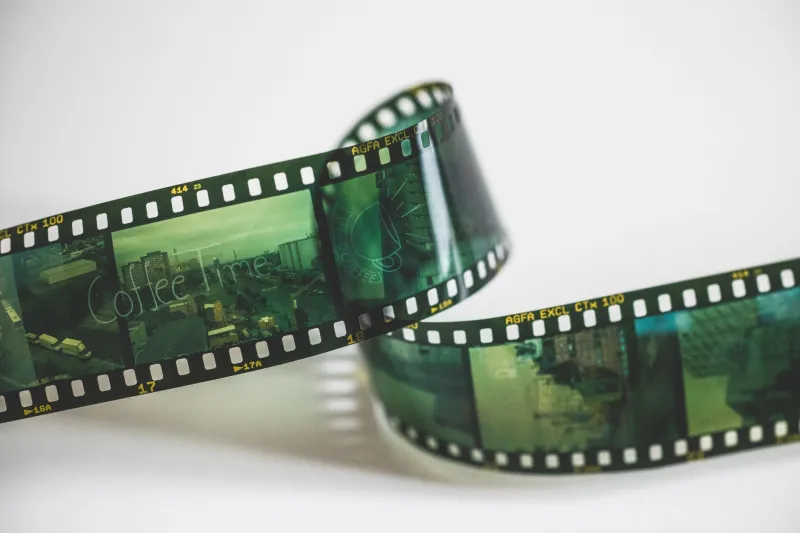
Somewhere in a climate-controlled storage unit in Burbank, there's a brick of Kodachrome that hasn't seen daylight since the Clinton administration. Experimental filmmakers want it badly — and they're willing to pay. The underground market for expired and discontinued film emulsions is booming, and the people driving it aren't interested in sentimentality. They're interested in what time does to chemicals when nobody's watching.
This isn't your grandmother's scrapbook aesthetic. The creators hunting these materials aren't chasing vintage warmth or retro vibes for a brand campaign. They're chasing unpredictability — the kind of color drift, fog, and grain mutation that no plugin can authentically replicate, because no algorithm has actually aged for thirty years in a forgotten warehouse.
The Market Nobody Talks About Out Loud
The trade in expired film stock exists in a strange in-between space — part collector culture, part artistic supply chain, part obsessive archivism. You find it on eBay listings buried under vague descriptions, in Facebook groups with names that read like coded messages, at estate sales where the deceased happened to be a cinematographer. Refrigerators full of expired Ektachrome change hands for hundreds of dollars. Discontinued Fuji stocks get traded like rare vinyl.
Maria Chen, a Brooklyn-based video artist who's been working with expired stock for about six years, describes the acquisition process as half the creative work. "You're not just buying film," she says. "You're buying a specific history — where it was stored, what temperature it lived at, whether it was near a window. All of that shows up in the image." Chen recently completed a short film shot entirely on Agfachrome stock from the early 1990s. The resulting footage blooms with magenta halos and green shadow drift that she says felt "like the film was remembering something I wasn't there for."
That quality — the sense of a material carrying embedded time — is exactly what's drawing a new generation of filmmakers away from digital precision and toward chemical uncertainty.
What Expiration Actually Does
Here's the technical side, briefly: film emulsions are made of light-sensitive silver halide crystals suspended in gelatin. Over time, those crystals degrade. The dye layers — cyan, magenta, yellow — break down at different rates depending on temperature, humidity, and exposure to radiation. What you get when you shoot on this material is a kind of visual archaeology: color channels that no longer speak to each other the way they were designed to, shadow areas that fog into strange purples and greens, highlights that blow out into color temperatures that have no name.
For a filmmaker who wants control, this is a nightmare. For a filmmaker who wants surprise, it's a gift.
There's also the issue of speed. Expired film loses sensitivity — roughly one stop per decade as a rough rule of thumb, though real-world behavior is far messier than that. Shooting on a 400-speed stock from the 1980s might require you to expose it as though it's 100 speed, or 50, or whatever the film itself seems to want that day. The unpredictability isn't a bug. It's the entire creative proposition.
Archivists, Hunters, and the Ethics of Obsolescence
Not everyone in this ecosystem is purely motivated by aesthetics. Some of the most important players are archivists and preservationists who worry about what happens when experimental artists consume the last remaining stocks of discontinued emulsions. There's a genuine tension here.
Dave Reyes runs a small film archive in New Mexico focused specifically on discontinued professional cinema stocks. He's watched the experimental filmmaking community's appetite for these materials grow significantly over the past five years, and he has complicated feelings about it. "I understand the creative impulse completely," he says. "But some of these emulsions are the last physical records of a specific photochemical moment. Once they're shot, they're gone." Reyes has started advocating for community agreements around particularly rare stocks — essentially, informal ethics frameworks for what gets used and what gets preserved.
Other voices push back on this framing entirely. If a box of film rots in a storage unit, they argue, that's not preservation — that's just slower destruction. At least shot footage creates something.
The Visual Language of Deterioration
What's most interesting about the expired film movement isn't the debate over supply. It's the specific visual language these materials generate and why it resonates so hard right now.
Look at the work coming out of this corner of experimental video and you'll notice a few recurring qualities: color that feels emotionally charged rather than accurate, grain structures that pulse and shift rather than sitting inert, a general sense that the image is slightly out of reach — present but not quite stable. In an era of 4K hyperclarity and algorithmically optimized visual feeds, these qualities hit differently. They feel like resistance.
Jasmine Tran, a Los Angeles-based filmmaker who recently premiered a piece shot on expired aerial survey film from the 1970s, talks about the emotional register of deteriorated images. "There's something about an image that's visibly been through time," she says. "It asks more of you. You have to meet it somewhere. That's the opposite of what most video does right now, which is just pour itself into your eyes."
That framing — the image as something that requires participation rather than passive consumption — feels central to why expired film has found such a committed audience among experimental creators. It's not just a look. It's a stance.
Where This Goes Next
The supply of truly expired and discontinued film stock is finite. That's just math. But the community building around it seems designed to outlast the materials themselves — developing processing techniques, documentation practices, and creative frameworks that treat chemical obsolescence as a permanent subject rather than a temporary trend.
Some filmmakers are beginning to deliberately engineer expiration in real time, storing fresh stocks in conditions designed to accelerate degradation in specific ways. Others are collaborating with chemists to understand the degradation process at a molecular level, not to prevent it, but to direct it.
The goal, as Maria Chen puts it, is simple and kind of beautiful: "Let time do something the camera can't."