Blown Speakers, Broken Signals: How Underground Filmmakers Are Turning Sonic Wreckage Into Visual Gold
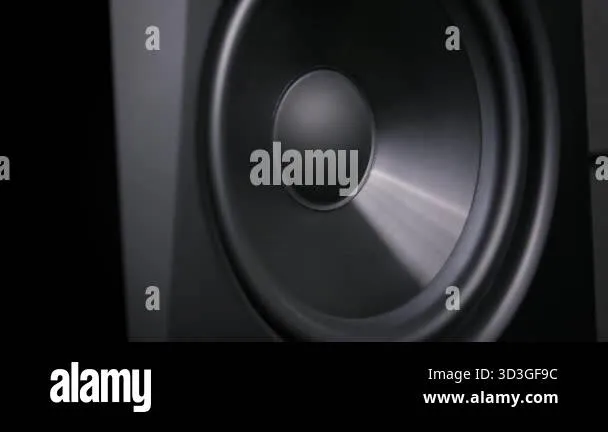
Photo: blown speaker cone close up distorted audio equipment studio, via c8.alamy.com
There's a particular kind of sound that a blown speaker makes. It's not clean. It's not pretty. It rattles somewhere between a cough and a scream — a distorted, gasping frequency that most engineers would kill to eliminate. But a growing number of experimental filmmakers and music video directors? They're chasing that sound like it's gold.
And visually, they're building entire worlds around it.
This isn't about lo-fi aesthetics as a shortcut or a retro aesthetic borrowed from a decade you didn't actually live through. This is something rawer and more intentional — a philosophy that treats audio failure not as a technical problem to be solved, but as a narrative tool with something real to say.
When Damage Becomes the Point
The shift started quietly, the way most genuinely interesting things do. A handful of directors shooting on shoestring budgets — working out of garages in Detroit, converted warehouses in East LA, cramped apartments in Brooklyn — began noticing something strange. When their equipment broke down mid-shoot, the resulting footage felt more alive, not less.
The distortion artifacts. The feedback loops. The way a corrupted audio file could make an image feel like it was physically vibrating. These weren't mistakes anymore. They were messages.
Director and audio experimentalist Mara Voss, who's been making music videos for noise and post-punk acts out of Chicago's underground scene for the past five years, describes the realization as almost spiritual.
"I had this ancient Tascam interface that kept glitching out," she says. "The audio would clip, the visual monitoring would stutter, and one day I just started filming the interface itself while it was malfunctioning. What I captured looked like something alive. Like the machine was having a panic attack. And that was exactly the feeling the song was trying to get across."
That video — for a Chicago noise act that asked not to be named — never got a formal release. It lives on a private Vimeo link that's been passed around enough times to develop its own mythology.
Sonic Degradation as Visual Language
What's fascinating about this movement is how deliberately its practitioners think about the relationship between what you hear and what you see. Traditional filmmaking treats audio as support for the image — the score swells, the dialogue grounds you, the sound design fills the room. But when the audio itself is the subject, something else happens entirely.
When you film a speaker cone vibrating under a blown signal, you're capturing physics in distress. The visual ripple of that cone, the way the cabinet shakes, the tiny plumes of dust that rise from a woofer pushed past its limits — it's visceral in a way that no clean, produced image can replicate. It communicates chaos, urgency, and fragility simultaneously.
Filmmaker and sound designer Tre Calloway, based out of Atlanta, has built an entire visual practice around this idea. His work — which spans short films, music videos for experimental hip-hop artists, and gallery installations — consistently foregrounds damaged or degraded audio hardware as both subject and collaborator.
"I started keeping broken gear on purpose," Calloway explains. "Busted mixers, interfaces with fried preamps, speakers with the surrounds half-torn out. I'll run a signal through something I know is going to distort it in unpredictable ways, and I'll film the hardware while that's happening. The image becomes a record of the sound being destroyed in real time."
His short film Gravel Mouth — which screened at a handful of regional experimental film festivals last year — features forty minutes of exactly this: close-up footage of damaged audio equipment processing field recordings from post-industrial sites in Birmingham, Alabama. The audio feedback creates visible resonance patterns in liquids balanced on speaker cones. The effect is hypnotic and genuinely unsettling.
The Philosophy Behind the Feedback Loop
So why does this resonate right now? Part of the answer is cultural.
We're living in an era of aggressively polished content. Streaming platforms have optimized audio and video to within an inch of their lives. Every surface is smooth, every transition is seamless, every frequency sits exactly where an algorithm decided it should. Against that backdrop, the sound of something breaking down doesn't just feel authentic — it feels rebellious.
There's also something honest about it. A blown speaker doesn't perform. A corrupted audio file doesn't try to sell you anything. The malfunction is just the malfunction — unmediated, unpredictable, completely indifferent to whether you find it beautiful or not.
For audiences who've grown up navigating the difference between curated online personas and actual human experience, that kind of raw, uncontrolled signal hits differently.
"People are exhausted by things that are trying too hard to look real," says Voss. "But actual damage? Actual failure? You can't fake that. Audiences feel it in their bodies."
What It Actually Looks Like
The visual vocabulary of this movement is specific and recognizable once you know what you're looking at. Close-up shots of speaker cones under stress. The phosphorescent glow of an overloaded VU meter. The way a damaged audio interface can cause visual artifacts in connected camera equipment — a kind of electrical cross-contamination that produces unexpected image distortion.
Some directors are going even further, using corrupted audio files to directly manipulate video through software that reads audio data as visual input. The result is footage that seems to physically respond to sonic damage — images that stutter, fragment, and reassemble themselves in sync with distortion artifacts.
Calloway has been experimenting with this technique for his next project, a series of music videos for an experimental producer who works under the name Slack Current.
"The idea is that the audio corruption literally writes the image," he says. "Every glitch in the sound becomes a glitch in the visual. The video is a direct translation of the audio's damage. They're the same thing."
Breaking Down to Break Through
There's something almost therapeutic about what these filmmakers are doing — and maybe that's part of why it's finding an audience. In a creative landscape that constantly rewards polish and punishes imperfection, choosing to center the broken thing, to make it the whole point, is a quiet but meaningful act of refusal.
Broken equipment doesn't apologize. It just keeps making noise.
And right now, that noise is starting to sound like something worth listening to.