Beautiful Corruption: Why Glitch Art Is the Most Honest Visual Language of Our Era
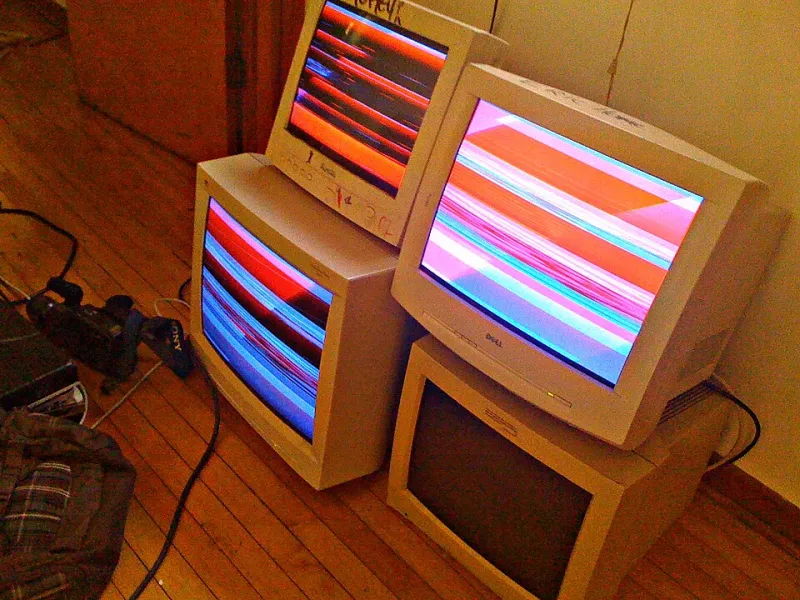
Photo: jonCates, CC BY-SA 4.0, via Wikimedia Commons
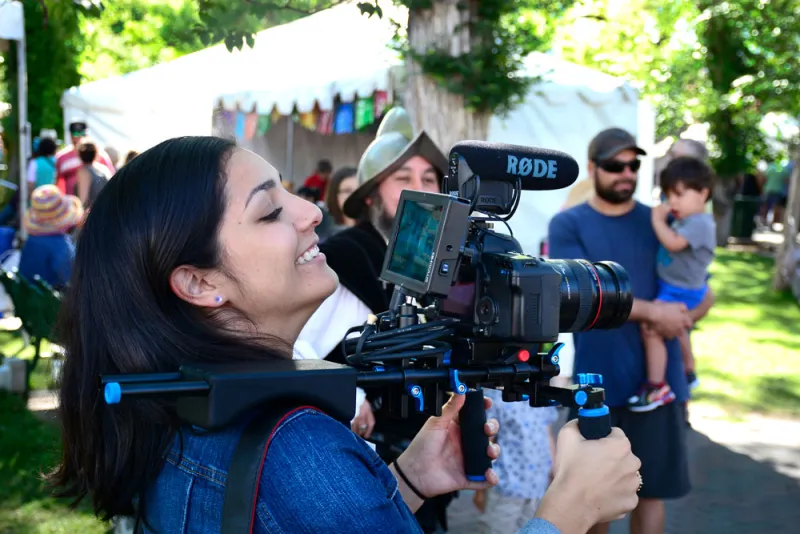
Something weird happened somewhere between the late 2010s and now. The stuff that used to make you panic — the frozen frame, the pixel smear, the stuttering playback that turns a human face into a cascading wall of colored noise — became desirable. Not just tolerated. Actively sought out. Lovingly crafted by filmmakers who spend hours making their footage look like it's dying.
Welcome to glitch aesthetics, and trust us: the acid rain has never looked prettier.
From Accident to Intention
Glitch art didn't start in a studio. It started in frustration — a corrupted VHS tape, a Nintendo cartridge shoved in at the wrong angle, a JPEG compressed so many times it started hallucinating new colors. For decades, these were errors to be corrected, evidence of failure in a system that demanded seamlessness.
But a handful of artists in the early 2000s started looking at those failures differently. Rosa Menkman, a Dutch theorist and visual artist who remains one of the most cited voices in glitch culture, framed it succinctly: the glitch doesn't just break the image — it reveals the image. Strip away the polished surface and you see the architecture underneath, the bones of the machine, the raw data that was always there but hidden behind a clean interface.
That philosophical shift — from glitch-as-mistake to glitch-as-disclosure — is what eventually cracked open the aesthetic for a whole generation of experimental directors and music video artists.
The 2020s Changed Everything
If the 2010s were about Instagram perfection and hyper-saturated visual branding, the 2020s arrived like a hard drive crash. A global pandemic, algorithmic overload, a collective reckoning with surveillance capitalism — and suddenly, the clean, optimized aesthetic started feeling like a lie. Or at least like someone else's lie.
Glitch art filled that vacuum with something more honest. When Arca released visuals for her self-titled album that looked like a face melting through corrupted video memory, it wasn't a technical accident — it was an emotional truth rendered in pixel decay. When experimental directors started databending footage of protest marches, layering in artifacting and signal noise, the broken image communicated something the clean image couldn't: the feeling of reality fracturing in real time.
This is what separates glitch aesthetics in the 2020s from its earlier, more academic iterations. It's no longer primarily an intellectual exercise. It's a gut punch.
How Filmmakers Are Doing It
The tools have democratized, which is a huge part of why glitch art exploded. You don't need a graduate degree in media theory or a $50,000 editing suite. You need curiosity and a willingness to break things on purpose.
Some directors work with datamoshing — a technique that exploits video compression algorithms to bleed one image into another, creating that unmistakable effect where a face seems to melt into a background or a dancer's body trails behind itself in smeared color. Others use feedback loops, running video signals through analog hardware in ways that cause the system to essentially argue with itself, producing unpredictable visual static.
There's also a whole school of creators working with circuit bending — physically modifying hardware like old VHS players or CRT monitors to introduce controlled chaos into the signal chain. The results are wildly unpredictable, which is kind of the point. You set up the conditions, hit record, and let the machine decide what kind of beautiful disaster it wants to make today.
Software tools like Avisynth, VDMX, and even deliberately misused export settings in Premiere Pro have become part of the glitch artist's toolkit. Some creators write custom scripts that introduce errors at the data level. Others take the lo-fi route — re-filming footage off a monitor with a handheld camera, then re-filming that, until the generational loss stacks up into something that looks genuinely alien.
The Music Video Connection
No visual medium has embraced glitch aesthetics more enthusiastically than the music video, and it makes sense. Music videos have always been the wild west of visual art — shorter than film, less constrained than commercial work, and historically willing to go places that mainstream cinema won't touch.
Artists across genres have leaned in hard. Industrial and noise acts have been here since the beginning, obviously, but the glitch visual language has migrated into hip-hop, hyperpop, R&B, and even country-adjacent indie spaces. When a genre as sonically polished as hyperpop starts pairing its music with visuals that look like a Windows 98 machine having a spiritual crisis, you know the aesthetic has genuinely permeated culture.
Directors like Fleur & Manu, Hiro Murai (whose work with Childish Gambino pushed visual experimentation into mainstream conversations), and a wave of younger, uncredited underground filmmakers have all contributed to normalizing the broken image as a legitimate artistic choice rather than a production shortcut.
Why It Matters Beyond Aesthetics
Here's the thing that separates glitch art from just being a cool-looking trend: it carries an argument. Every intentionally corrupted frame is, in some small way, a critique of the demand for technical perfection — and by extension, a critique of the systems that enforce that demand.
We live in a media environment that algorithmically punishes rough edges. Platforms optimize for high-resolution, fast-loading, perfectly encoded content. The machinery of digital distribution is essentially a massive filter that rewards smoothness and penalizes deviation. Glitch art doesn't just tolerate that filter — it sabotages it. It insists that the error is worth looking at. That the breakdown has something to say.
In an era when AI-generated imagery is flooding visual culture with content that's technically flawless and aesthetically hollow, glitch aesthetics feel more radical than ever. The machine can make something perfect. It cannot make something that looks like it's suffering.
Where It's Headed
The interesting tension right now is between glitch art's underground roots and its growing mainstream visibility. Once a visual language gets co-opted by luxury brands and major label marketing departments — and it's happening, slowly — the subversive charge starts to drain out.
But the artists who are genuinely invested in this space aren't standing still. The frontier is moving toward AI-assisted glitch — using generative models not to produce clean images but to introduce novel forms of corruption that no human editor could anticipate. Others are experimenting with live glitch performance, where the visual breakdown happens in real time during concerts or art installations, making the error an unrepeatable event rather than a fixed artifact.
The acid rain keeps falling. The pixels keep bleeding. And somewhere in that beautiful, broken mess, visual art keeps finding new ways to tell the truth.